10 Facts News Media Leaders Can't Ignore About AI Translation in 2026
The future of news isn’t just faster.
It’s multilingual, accessible, and global by default.
From breaking news to live sports coverage and international broadcasts, audiences now expect content in their own language - instantly. And for media companies, that expectation is quickly becoming a competitive advantage.
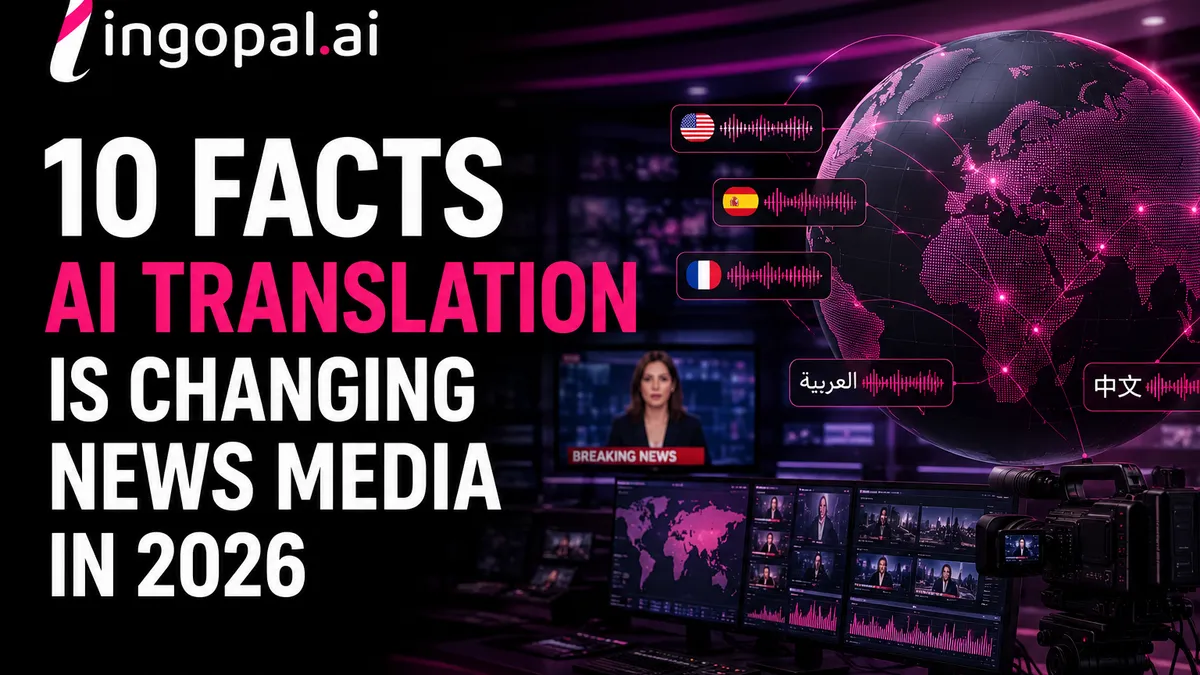
Here are 10 important facts shaping the future of AI-powered captioning, dubbing, and translation for news media in 2026.
1. Audiences No Longer Wait for Translation
News moves in real time - and audiences expect the same.
Whether it’s a press conference, election coverage, crisis update, or live sports commentary, viewers want access immediately in their native language. Delayed localization increasingly means lost engagement.
That’s why real-time AI translation is becoming essential infrastructure for modern media companies.
2. Accessibility Is Now a Growth Strategy
Captioning is no longer just about compliance.
Accessible content increases watch time, expands audience reach, improves engagement on social platforms, and helps organizations connect with multilingual and hearing-impaired audiences globally.
The most forward-thinking broadcasters now see accessibility as a business advantage - not just a legal requirement.
3. Live AI Dubbing Has Reached Broadcast Quality
A few years ago, live dubbing sounded robotic and unnatural.
Today, AI can generate high-quality translated audio while preserving tone, pacing, and emotional nuance - making multilingual live broadcasting finally scalable.
The industry benchmark for professional-quality live dubbing is now approximately 15 seconds of latency.
4. Generic Translation Tools Aren’t Built for Newsrooms
News content is chaotic.
Fast speech. Breaking terminology. Political references. Proper nouns. Regional slang. Emotional interviews.
General-purpose AI tools often struggle in these environments. Broadcast-focused AI platforms are specifically trained to handle real-time newsroom workflows and live production demands.
5. Voice Matters More Than Most People Realize
Audiences trust familiar voices.
When a respected anchor, journalist, or commentator suddenly sounds generic or artificial, credibility can drop instantly.
That’s why voice preservation and AI voice cloning are becoming critical for global broadcasting. Maintaining the speaker’s vocal identity helps preserve authenticity, trust, and emotional connection.
6. Emotion Is Part of the Message
Translation isn’t only about words.
Urgency during breaking news. Empathy during interviews. Excitement during sports coverage.
Modern AI localization platforms now analyze emotional tone and contextual meaning to preserve the original impact of the speaker across languages.
7. Multilingual Broadcasting Is Becoming a Competitive Edge
Global audiences are exploding across streaming, sports, entertainment, and news.
Organizations that can instantly localize live content into multiple languages gain access to entirely new markets, stronger viewer retention, and increased international reach.
The companies winning attention globally are increasingly the ones removing language barriers first.
8. Real-Time Captions Are Essential for Modern Viewing Habits
A huge percentage of viewers now consume content muted-first - especially on mobile and social platforms.
Real-time captioning improves accessibility, engagement, viewer retention, and overall content performance across digital channels.
9. Human Oversight Still Matters
AI is powerful - but editorial trust remains critical.
The best AI translation workflows still include human-in-the-loop review processes, giving editors the ability to monitor, adjust, and validate translations when needed.
This combination of AI speed + human oversight is what creates scalable and reliable global news operations.
10. The Future of Media Is “Produce Once, Reach Everyone”
This is where the industry is heading.
One live stream.
One production workflow.
One source feed.
Distributed globally in dozens of languages simultaneously.
That’s the new language layer powering modern media.
How Lingopal Fits Into This Future
Lingopal helps broadcasters, streaming platforms, sports organizations, enterprises, and media companies deliver real-time multilingual experiences at scale.
With support for:
- Real-time speech-to-speech translation
- AI dubbing
- Live captions
- 100+ languages
- Voice preservation
- Ultra-low latency workflows
- Live streaming and VOD localization
Lingopal helps organizations expand global reach without rebuilding their production workflows.
The goal isn’t simply translation.
It’s creating experiences where every viewer feels like the content was made for them.
Ready to Reach Global Audiences Without Language Barriers?
Whether you’re broadcasting live news, sports, events, podcasts, or streaming content globally, multilingual experiences are quickly becoming the expectation - not the exception.
Talk to the Lingopal team and discover how real-time AI localization can help your organization expand reach, improve accessibility, and unlock entirely new audiences.
→ Book a demo with Lingopal today: https://lingopal.ai/schedule-demo